
The Caste of Beauty: Making It Up on 'The Caste of Beula'
- Tashana Washington

- Jul 10
- 4 min read
By Tashana Washington

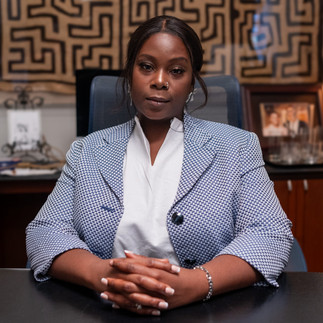
Over the two-day shoot on the set of The Caste of Beula, you might hear the low sizzle of a curling iron, the crisp click of a compact being opened, or a sharp inhale of breath as a character steps into the mirror-ready glow of light—flawless, radiant, and intentional. But behind the glam lies a story of precision, purpose, and pride, led by two exceptional Black artists: makeup department head Rhonda Jackson and lead hair stylist Allison Fitchett.
On many productions, makeup and hair are seen as cosmetic touches—important but secondary. On the Caste of Beula, they were essential narrative tools. The show's very premise—a fierce and nuanced look at colorism, abandonment, and the rejection behind the power of the world’s most elite Black talent agency—demanded a visual language that reflected not just character arcs, but the complex history of Black beauty, internalized bias (colorism), and generational representation.
"We weren’t just doing makeup. We were telling stories through skin," says Jackson, whose previous credits include short films, All for You, and Art of Eternal Love. "Black skin isn’t one thing. It’s hundreds of shades, undertones, and textures. That’s the challenge. And the opportunity."




Before production began, I sat down with both Rhonda and our Director of Photography, Adam Lupiani, to map out a unified visual plan. The goal? To ensure every hue of Black skin on camera—whether deep mahogany, warm bronze, or sun-kissed almond—was lit and captured with reverence. We all agreed: the diversity of skin tone on this show wasn't just an aesthetic choice. It was a character unto itself.
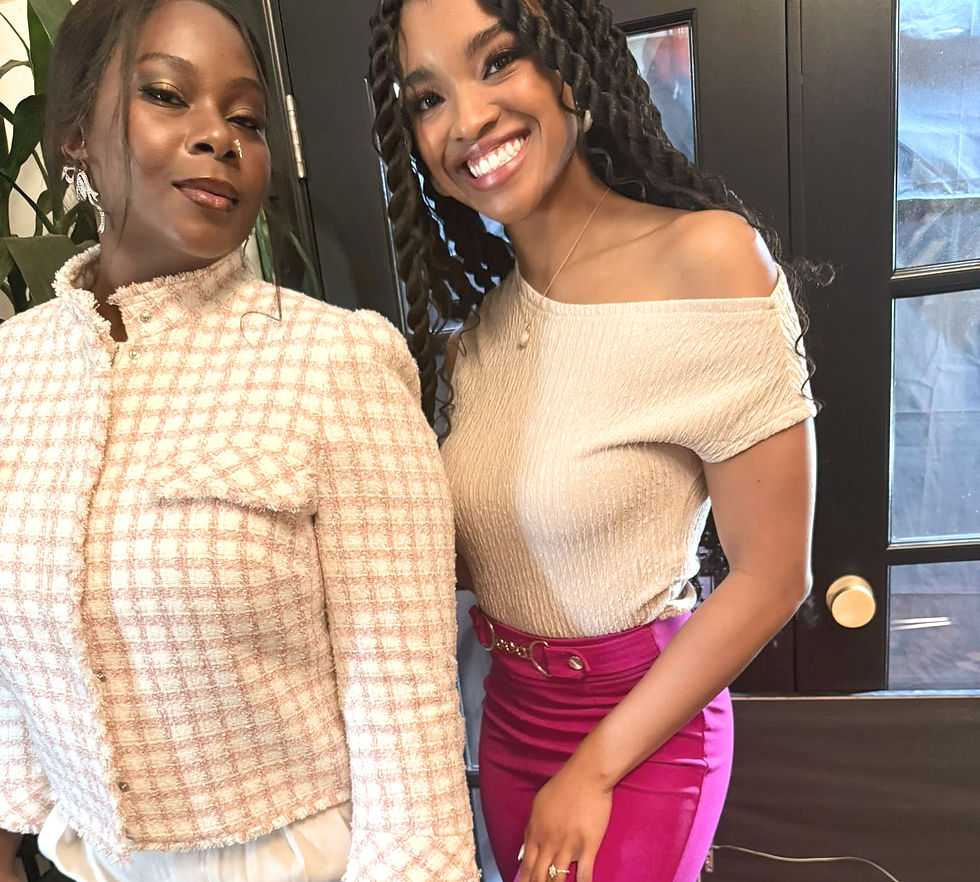
Adam spent weeks plotting camera lenses, angles, and filters, while Rhonda tested foundation ranges under various lighting setups. Our director, Dionne Roberts-Emegha, created an introduction video that highlighted the varying complexions and desired looks to see how audiences responded to each actress. The objective wasn’t uniformity. It was harmony—ensuring that each actor's natural glow was elevated and captured by our choices.
Hair stylist Allison Fitchette, owner of Allison's Mini-Salon, echoed this holistic approach. "Hair is emotion. It's protection. It’s armor," she says. "Every character’s style had to say something about who they were—and where they were in their journey."
For instance, when we meet Beula Johnson (played by Precious Oginni-Oyeneye), her look is sleek, powerful, and polished. Her hair is silk pressed into a sharp, sculptural power-tail, her makeup soft but impenetrable. It’s the look of a woman who controls the narrative. Contrast that with Dream Kelly, our rising artist, whose dewy makeup and textured curls reflect youth, vulnerability, and a desire to find her place.



Colorism—an often unspoken but deeply felt force in the Black community—is a subtle but persistent theme in The Caste of Beula. Through beauty, we chose to address it head-on. Our palette choices, contouring techniques, and even the shades of lipstick were selected to celebrate—not homogenize—the cast’s diversity. In doing so, we pushed back against the industry norm of defaulting to Eurocentric ideals. It was our vixen, Priska Lorenze, for example who donned blonde hair and a more revealing ensemble.

The beauty department’s kit was a masterclass in inclusivity. Rhonda stocked over 40 foundation shades, mixing custom tones when necessary. Her team used brands like Tehila Cosmetics (Nigerian brand), Danessa Myricks, Juvia's Place, LYS, One/Size— alongside Tom Ford and MAC—lines created by artists who understand the nuance of melanin.
"There are still sets where darker-skinned actresses have to bring their own foundation," Jackson shares. "We made it our mission to never let that happen here."


We also looked to our foremothers for inspiration. Legends like Bernadine Anderson—the first Black woman accepted into the Hollywood makeup union—and Marietta Carter-Narcisse, who worked on Boyz n the Hood and What’s Love Got to Do With It, paved the way for what we’re doing today. Carter-Narcisse once said, "When you know your culture, you don’t have to conform. You create your own standard." That quote lived on the brushes of our makeup trailer.
But more than anything, The Caste of Beula treated beauty as strength. As armor. As grace under fire. Whether it was Ari’s signature deep lip and soft wave that masked her manipulations, or Sterling’s no-nonsense topknot and matte complexion, every aesthetic choice was charged with intention.
“We weren’t trying to make anyone pretty,” Allison adds. “We were trying to make them powerful.”
That power was visible in every frame. It helped define the show’s tone and elevate its message. And for those of us behind the scenes—especially the Black women who rarely get to see our full selves reflected on screen—it was a form of reclamation.
In the end, hair and makeup weren’t afterthoughts. They were battlegrounds for authenticity. Declarations of worth. And above all, love letters to every shade of Blackness we carry with us.
The Caste of Beula may be a drama about empires, but behind the scenes, we were building something far more: a standard.


Comments